
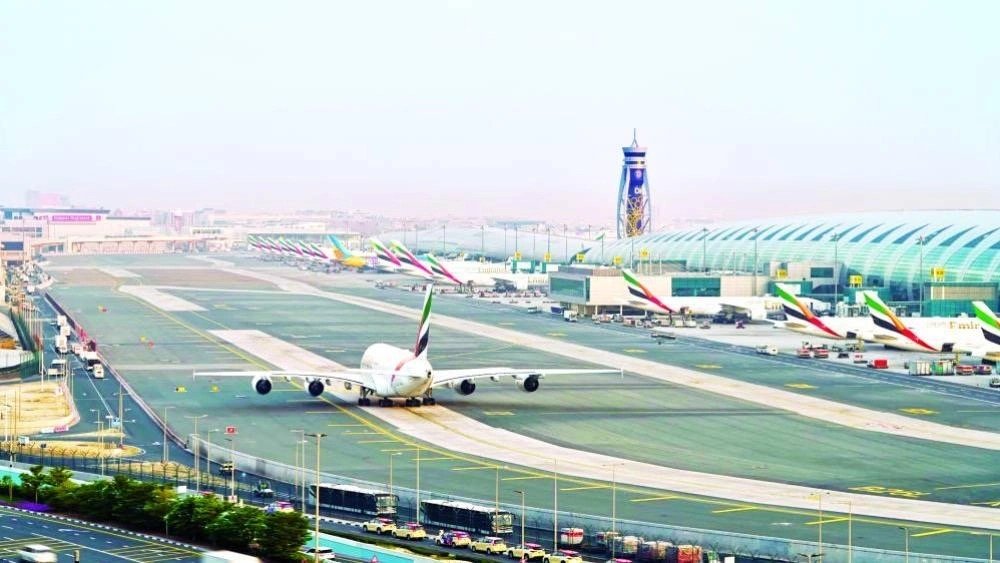
Dubai International Airport topped the list of the busiest airports in the region in terms of total international and domestic flights, surpassing Hartsfield-Jackson Atlanta Airport to become the world’s largest airport by available seat capacity, according to data from the international aviation data platform, OAG.
The data showed that Dubai Airport ranked first globally in total seat capacity for both international and domestic flights combined, handling 5.5 million departing seats (11 million scheduled seats) in January, marking a 4% year-on-year increase in airline capacity compared to January 2025.
Meanwhile, Atlanta Airport ranked second with 4.9 million seats, a 1% increase year-on-year, while Tokyo Haneda Airport remained third despite a 1% decline, totaling 4.64 million seats. China’s Baiyun International Airport ranked fourth globally with 4.42 million seats.
According to the data, Dubai Airport led the region in total flight operations, followed by Doha Airport in second place with 2.9 million seats, and Jeddah Airport in third with almost the same capacity. Sharjah Airport recorded double-digit growth of 17.5%, reaching 917,000 seats compared to 780,000 in 2025, while Abu Dhabi’s Zayed International Airport increased its seat capacity by 10% to reach 1.7 million seats in November, up from 1.55 million seats the previous year.
The aviation sector in the UAE, especially at key airports such as Dubai, Abu Dhabi, and Sharjah, is witnessing remarkable growth amid rising travel demand and airlines expanding their fleets and flight schedules.
Dubai Airport recorded consistent growth throughout last year, achieving record levels, while UAE carriers continue to expand operations to and from Dubai by opening new destinations and adding flights to existing markets, driven by increased international travel demand. Estimates indicate that the strong growth in seat capacity at Dubai Airport will continue in the first quarter of 2026, fueled by the expansion of national carriers’ networks.